Long-term exposure to air pollution within EU regulations linked to impaired breathing in children and new cases of asthma in adults
25 August, 2020
Babies exposed to levels of air pollution within EU standards develop poorer lung function as children and teenagers, according to research presented at the European Respiratory Society International Congress. [1] The study also suggests that some of the risk from exposure to pollution can be reduced if babies are breastfed for at least 12 weeks.
A second study presented at the Congress [2] shows that adults who are exposed to air pollution, even at low levels, over a period of decades are more likely to develop asthma.
Researchers say their findings indicate that more needs to be done to reduce levels of air pollution to protect children’s developing lungs and prevent asthma in adults.
The first study was presented by Dr Qi Zhao from IUF – Leibniz Research Institute for Environmental Medicine in Düsseldorf, Germany. He told the virtual conference: “Evidence is growing that exposure to air pollution is a threat to children’s respiratory health. However, most studies have looked at the effects of recent exposure to pollution.
“Babies’ lungs are especially vulnerable because they are growing and developing, so we wanted to see if there are longer-term impacts for babies who are exposed to air pollution as they grow up.”
The study included 915 children living in two regions of Germany: Munich and Wesel. The children had tests to measure their breathing at the ages of six, ten or 15 years. The tests recorded how much air they could breathe out after taking their deepest breath (called forced vital capacity, or FVC) and how much air they could breathe out in one second (called forced expiratory volume in one second, or FEV1). When these measurements are lower it suggests that breathing is restricted or obstructed and can indicate conditions such as asthma.
Researchers compared these measures with estimates of the levels of pollution in the areas where the children lived in the first year of life, taking account of other factors that are linked to poorer lung function, such as whether the children’s mothers smoked.
They found that the higher the levels of air pollution babies were exposed to, the worse their lung function was as they grew into children and teenagers. They saw an even bigger impact on lung function in children who developed asthma. The results also suggested some of the damage linked to air pollution was reduced in babies who were breastfed.
Dr Zhao added: “Our results suggest that babies who grow up breathing polluted air, even at levels below EU regulations, have poorer breathing as they grow into children and adults. This is worrying because previous research suggests that damage to lungs in the first year of life can affect respiratory health throughout life.”
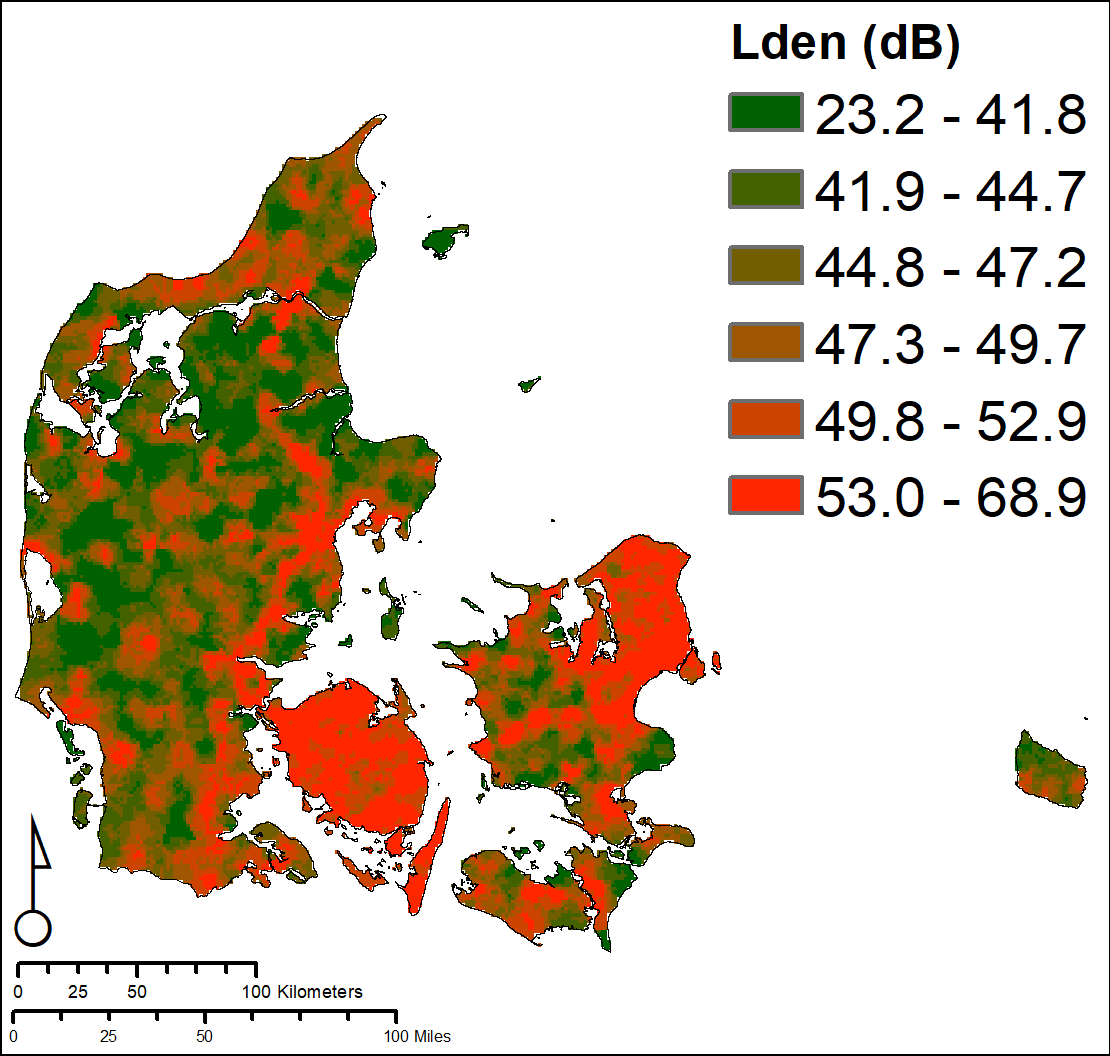
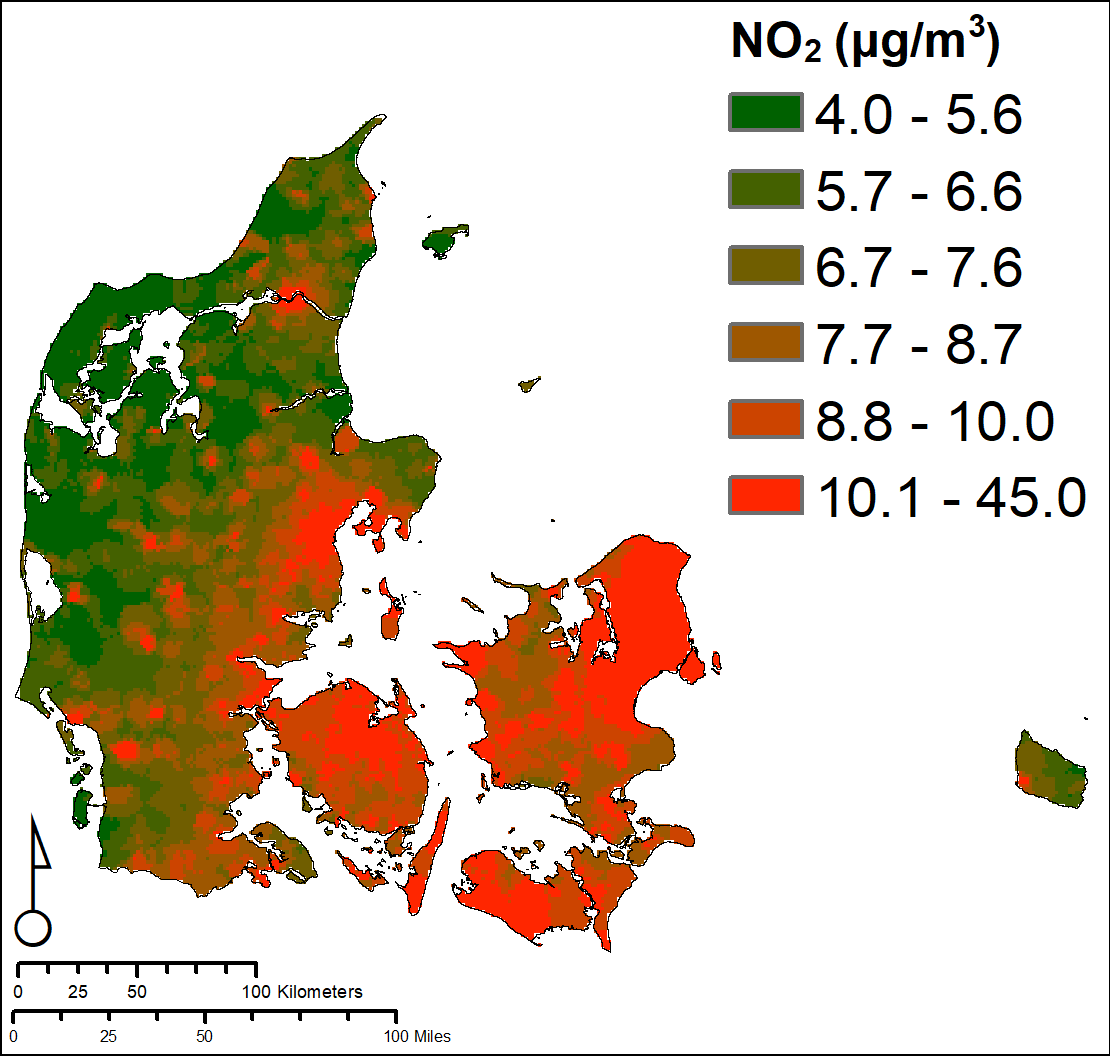
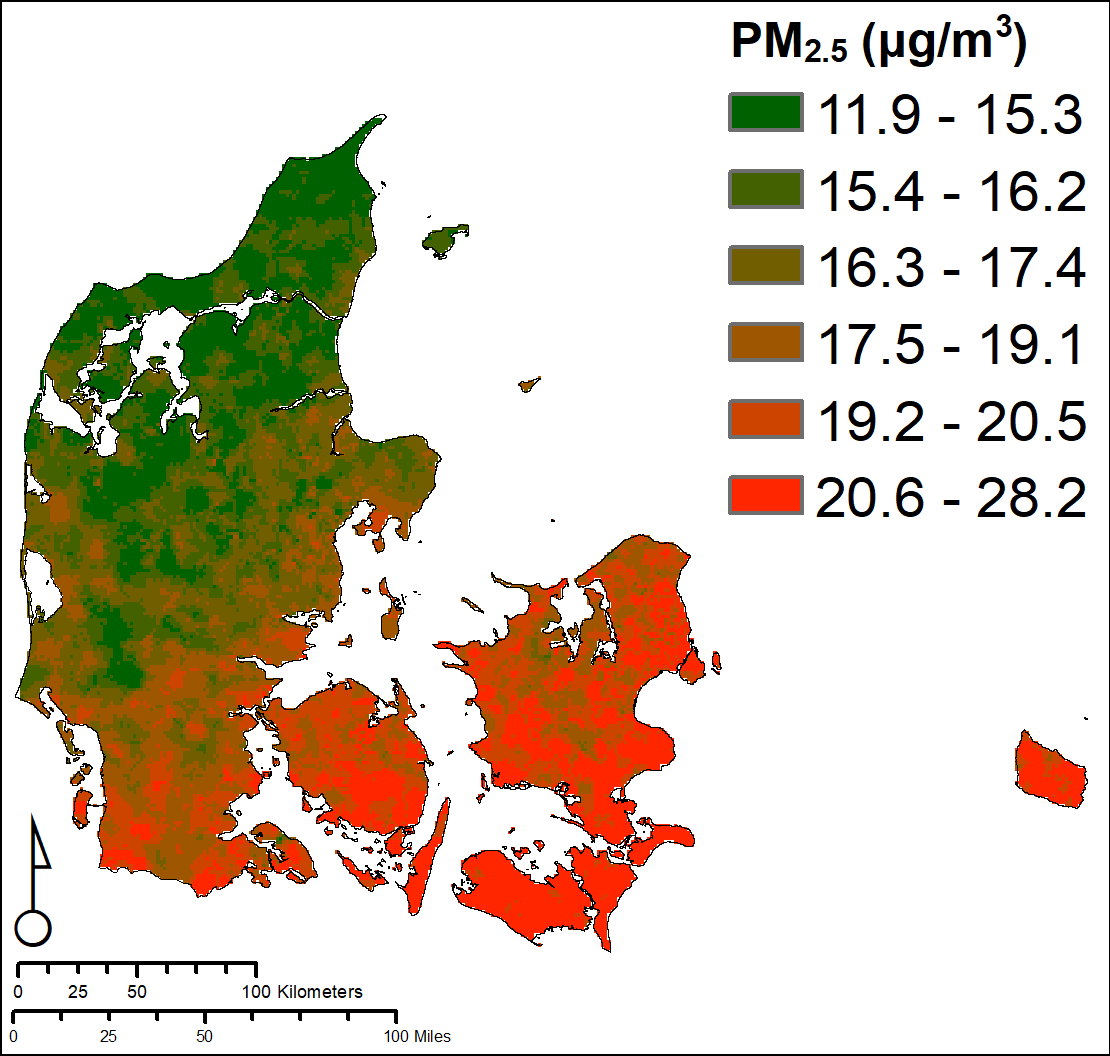
The second study included 23,000 Danish nurses who were recruited to the study in either 1993 or 1999. Researchers used data from the country’s National Patient Register to see whether the nurses were ever referred for asthma treatment. They compared this information with levels of two air pollutants – nitrogen dioxide (NO2) and particulate matter smaller than 2.5 microns (PM2.5) – and the levels of road traffic noise where the nurses lived. The researchers took into account other factors that are linked to asthma, such as smoking and obesity.
They found that while noise pollution was not linked to rates of asthma, there was a link between long-term exposure to air pollution and the likelihood of being diagnosed with asthma. There was a 29% rise in asthma risk for each increase in PM2.5 of 6.3 micrograms per cubic metre. And there was a 16% rise in asthma risk for each increase of NO2 of 8.2 micrograms per cubic metre.
The levels of air pollution that the nurses were exposed to was relatively low compared to many European cities, averaging around 18.9 micrograms per cubic metre for PM2.5 and 12.8 micrograms per cubic metre for NO2. The current European standards for PM2.5 and NO2 are 25 and 40 micrograms per cubic metre, respectively.
The research was presented by Shuo Liu from University of Copenhagen, Denmark. He told the conference: “The fact that we found a link with asthma, even at relatively low levels of exposure, suggests that there is no safe threshold for air pollution. This is strong evidence that our regulations on air pollution need to be stricter if we want to prevent cases of asthma.”
Thierry Troosters, who was not involved in the study, is President of the European Respiratory Society and Professor in Rehabilitation Sciences at KU Leuven, Belgium. He said: “These studies are concerning because they suggest the air we breathe is having a detrimental effect on adults and on babies’ developing lungs. We all want to breathe clean air, and parents want to do all they can to help their children grow up to be healthy, but we have limited control over the quality of air where we live.
“These findings suggest that current regulations, such as the EU limit values for air pollution, are not safe enough and we need to do more to protect children from the potential harms of air pollution. Previous research has shown that up to 67,000 cases of childhood asthma could be avoided every year in Europe if countries would meet the World Health Organization air quality limit values, which are lower than the EU’s current standards, so it is essential that we reduce exposures. Collectively these data – along with others – feed into the ongoing discussions among the WHO and in Europe to adapt the air quality recommendations.”
(ends)
Embargo: 00:01 hrs CEST, Tuesday 25 August 2020
[1] Early-life exposure to air pollution and lung function development into adolescence: the GINIplus/LISA birth cohorts
Background: Limited evidence exists on how exposure to air pollution during infancy may affect lung function development into adolescence.
Objectives: To investigate the association between early-life air pollution exposure and change in lung function until age 15.
Methods: In the GINIplus and LISA birth cohorts, 915 children from two German regions, Munich and Wesel, were investigated, who had at least two spirometric measurements at the age six, 10 and 15. Z-scores of FEV1 and FVC were calculated according to reference values for children in Germany. Annual average concentrations of nitrogen dioxide, particulate matter with diameters <2.5, <10 and 2.5–10µm (PM2.5, PM10 and PMcoarse), and PM2.5 absorbance at birth addresses were estimated by land-use regression models. Associations between early exposure and lung function changes were fitted using linear mixed models.
Results: In Wesel, for per interquartile range increase in air pollutants during the first year of life, z-scores declined annually by -0.009 (95%CI: -0.011; -0.007) to -0.021 (95%CI: -0.026; -0.015) for FEV1, and by -0.004 (95%CI: -0.006; -0.002) to -0.010 (95%CI: -0.016; -0.004) for FVC. In Munich, the attenuations were only statistically significant for FEV1 [range: -0.017 (95%CI: -0.027; -0.007) to -0.027 (95%CI: -0.047; -0.008)]. Reduced lung function was higher for children who developed asthma between 3-15 years (although insignificant) and for those with breastfeeding less than 12 weeks.
Conclusion: Early-life exposure to higher air pollution was associated with reduced lung function until adolescence. Breastfeeding may potentially reduce the risk of early air pollution on impaired lung function.
Embargo: 00:01 hrs CEST, Tuesday 25 August 2020
[2] Long-term exposure to air pollution, road traffic noise and asthma incidence: the Danish Nurse Cohort
Background: Long-term exposure to air pollution was linked with adult asthma onset and a study suggested relevance of road traffic noise. We linked long-term exposures to air pollution and road traffic noise to asthma incidence in adults.
Methods: We followed 23,093 female nurses (age ≥44 years) from the Danish Nurse cohort, recruited in 1993 or 1999, in the National Patient Register for first-ever hospital contact for asthma until 2015. Particulate matter with diameter <2.5µm (PM2.5) and nitrogen dioxide (NO2) levels at residence were estimated by the Danish DEHM/UBM/AirGIS modelling system and road traffic noise (Lden) by the Nord2000 model. Time-varying Cox regression was used to link 3-year moving averages of PM2.5, NO2 and Lden to asthma, adjusting for smoking, BMI, alcohol, diet, physical activity, marital and employment status.
Results: During 18.6 years mean follow-up 528 nurses developed asthma. The mean concentrations of PM2.5, NO2 and Lden at baseline were 18.9μg/m3, 12.8μg/m3 and 52.7dB. We found associations of asthma with PM2.5 (hazard ratio; 95% confidence interval 1.29; 1.03-1.61 per 6.33µg/m3) and NO2 (1.16; 1.07-1.27 per 8.19µg/m3) in the fully adjusted model, which changed to 1.21 (0.95-1.54) and 1.16 (1.04-1.29), respectively, after adjustment for Lden, and to 0.99 (0.74-1.35) and 1.17 (1.02-1.32), in the two-pollutant model with PM2.5 and NO2. Association of asthma with Lden (1.12; 1.00-1.25 per 10dB) attenuated after adjustment for PM2.5 (1.08; 0.96-1.22) or NO2 (1.01; 0.88-1.15).
Conclusion: Long-term exposure to traffic-related NO2 was associated with new-onset asthma in Danish nurses; while neither PM2.5 nor road traffic noise inferred risk of asthma.